 JOPERD Table of Contents
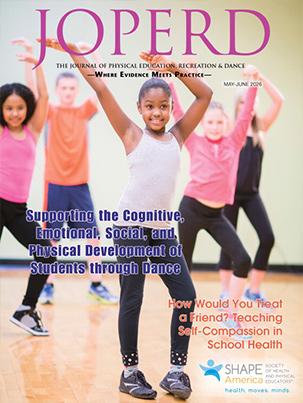
How Would You Treat a Friend? Part 1: Benefits of
Mindful Self-Compassion Within a School Health
Curriculum
Val Altieri Jr., Sierra Cordova, Robert Diehl, John McCarthy & Mariah Rooney
Has someone ever “shown up” in a key moment for you when
you were dealing with a difficult challenge? What difference
did that person’s presence make for you? When a student,
friend, or a loved one is going through difficulties, how do you show
up for them? Do you always show up for yourself in the same way
that you do for others? Sometimes the answer to that question is
“No.” If we know how important it is to show up with a caring
presence for others, then why is it that we are reluctant to show up
with the same fierce caring for ourselves? How do you think your
students would answer that same question?
Adolescents experience a period of rapid changes across biological,
psychological, and cognitive domains of development during which
they can become mercilessly hard on themselves, increasingly self-conscious
about their peers’ opinions, and constantly comparative of
themselves with others. Existing in such a state of excessive self-criticism
and hyperawareness of judgment can lead to intense emotions,
including shame, humiliation, and low self-esteem (Gilbert &
Irons, 2009), which can be further intensified by the influences adolescents
encounter on social media (Popat & Tarrant, 2023; Young
et al., 2024). Given the array of social, emotional, and developmental
challenges that impact adolescents’ self-concept, it is crucial that they
have accessible and positive ways to cope with these challenges.
To read the rest of this article, click here.